
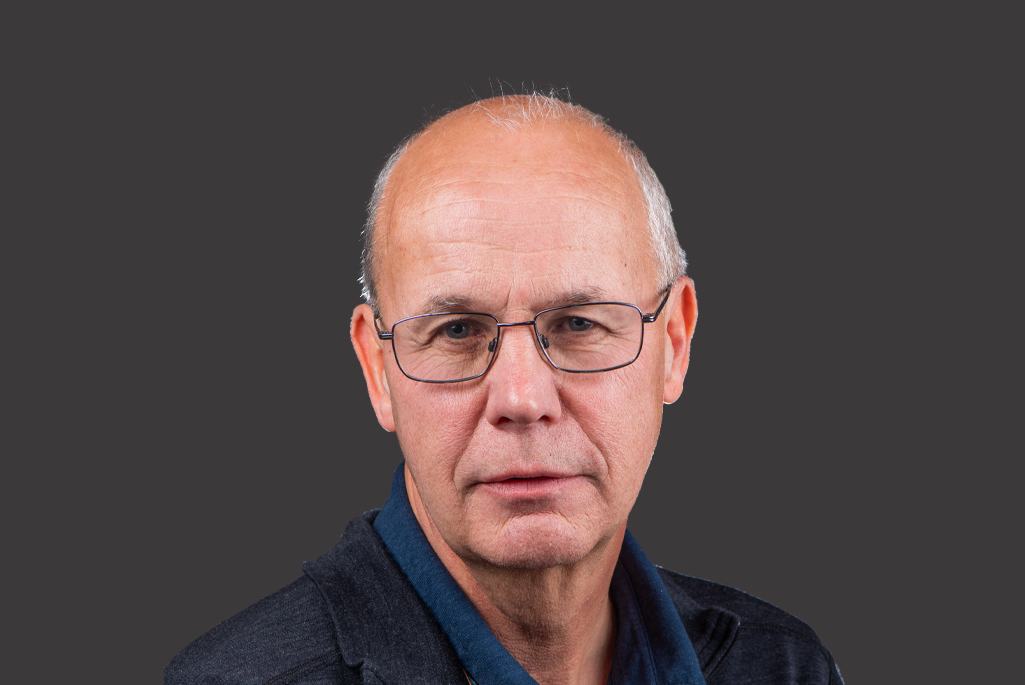
It has been quite a few months of change in the Division, the Area, and the Laboratory since the last NSD newsletter – Kathy Yelick is our new Laboratory Director, Reiner Kruecken has moved up to be the Associate Laboratory Director for Physical Sciences, and as for me, I’ve now stepped in as the interim NSD Director. It is with all these changes that I want to recognize Reiner’s leadership and commitment to NSD. The May 27-29 Laboratory Director’s Review of NSD recognized our science as world class, our staff as leaders in the field, and the committee was “particularly impressed by the stewardship efforts in building a community that is welcoming, supportive, nurturing and respectful.” While much is a reflection of Reiner’s efforts and leadership, it is all of the staff who make NSD what it is. Thank you, and let’s keep this going.
This summer we heard that two Genesis RFA Phase-1 partner proposals were awarded, one on “Denoising Quantum Sensors: Agentic Algorithm Creation and Real-Time AI for Quantum Enabled Rare-Event Discovery”, and the other on “Enabling Rare Event Discovery with Surrogate Modeling and Simulation AI Agents”. In addition, the NSD-led Data Provider Project “Physics Data for Machines (PD4M)”, also part of the Genesis Mission, was awarded two more years of funding, and is featured in this newsletter. Many congratulations to the successful teams and thank you to everyone in the Division for all your work in preparing the large number of excellent proposals submitted to the Genesis RFA earlier this year.
We have also continued to produce outstanding science and results that include the recent publication in PRL of a calculation of three-pion scattering using lattice Quantum Chromodynamics. Examples, featured on the NSD News Archive and newsletter Fragments, also show the impact of our technical developments and capabilities, such as the fabrication of novel highly segmented germanium detectors for the Compton Spectrometer and Imager (COSI), the Time of Flight Cascade Gamma Ray Imaging (TOF-CGI) work receiving a 2026 R&D 100 Award, and the successful GRETA commissioning and first experiment at FRIB.
In this newsletter, in addition to the article on PD4M, we have a retrospective of LBNLs Low-Background Facility and its 70-year support of many experiments in neutrino, double-beta decay, and dark matter. Another article highlights the work of our undergraduate summer researchers and NSD mentors. Thank you to everyone who contributed to this important and rewarding program, and to all the other mentor and outreach activities across the division and laboratory. It is this type of engagement, combined with our research excellence that makes NSD special. It’s a privilege to lead this division. Thank you.
