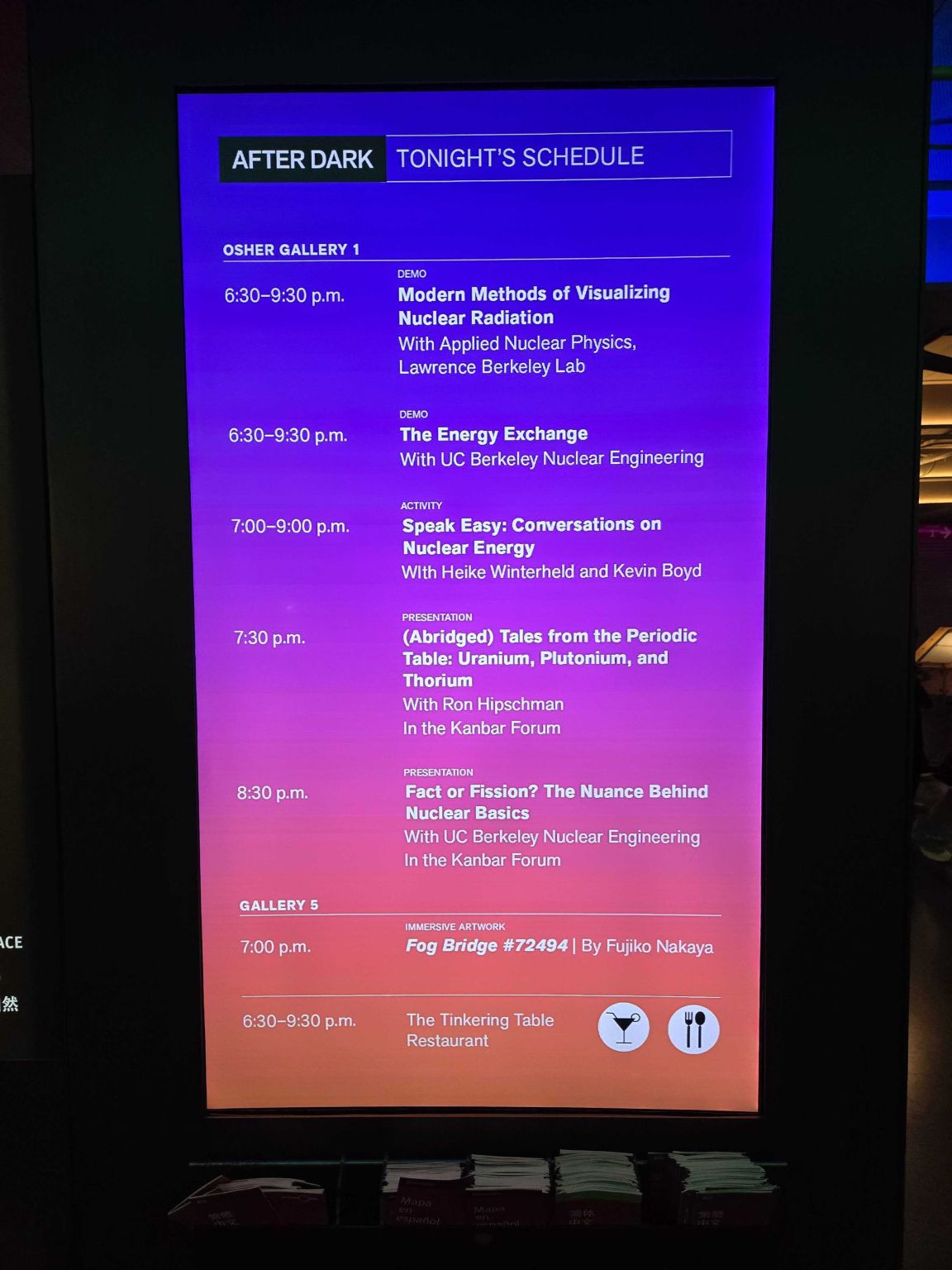
A display showing the agenda of the After Dark event.

On approach to the demonstration attendees were greeted by an introductory sign describing the demo and how the work of the program can improve the way we locate and understand radiation in complex environments.

The Applied Nuclear Physics program has pioneered the use of multi-modal sensing – combining data from multiple sensors including video, Lidar, and radiation detectors – to enable real-time, free-moving 3D radiation imaging and mapping through a technique known as Scene Data Fusion (SDF). SDF allows radiation to be visualized and fused with 3D models of the physical environment, providing transformational capabilities for radiation imaging in complex, real-world environments.
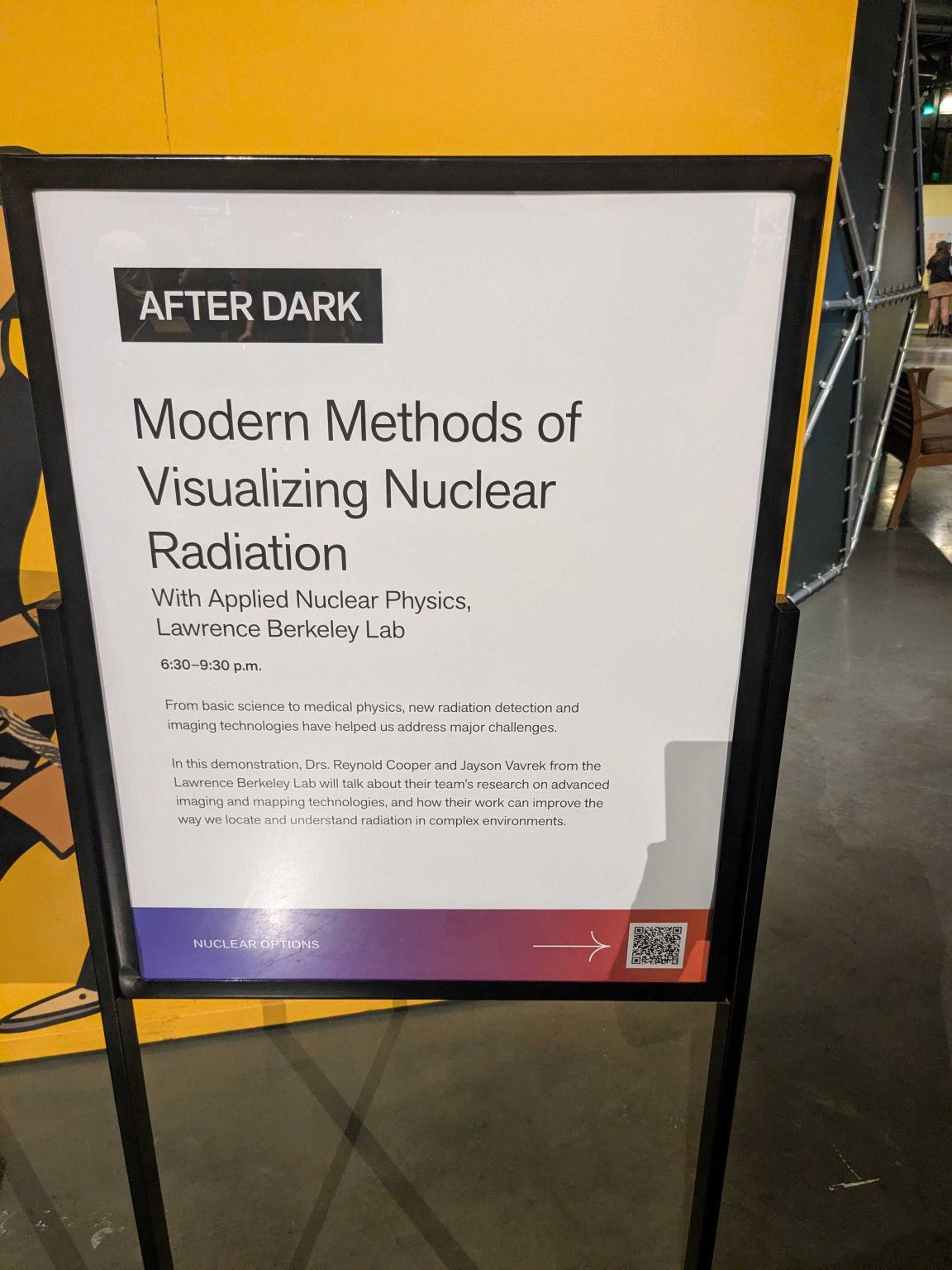
Image showing a sign reading "Modern Methods of Visualizing Nuclear Radiation With Applied Nuclear Physics, Lawrence Berkeley Lab 6:30-9:30 p.m. From basic science to medical physics, new radiation detection and imaging technologies have helped us address major challenges. In this demonstration, Drs. Reynold Cooper and Jayson Vavrek from the Lawrence Berkeley Lab will talk about their team's research on advanced imaging and mapping technologies, and how their work can improve the way we locate and understand radiation in complex environments."

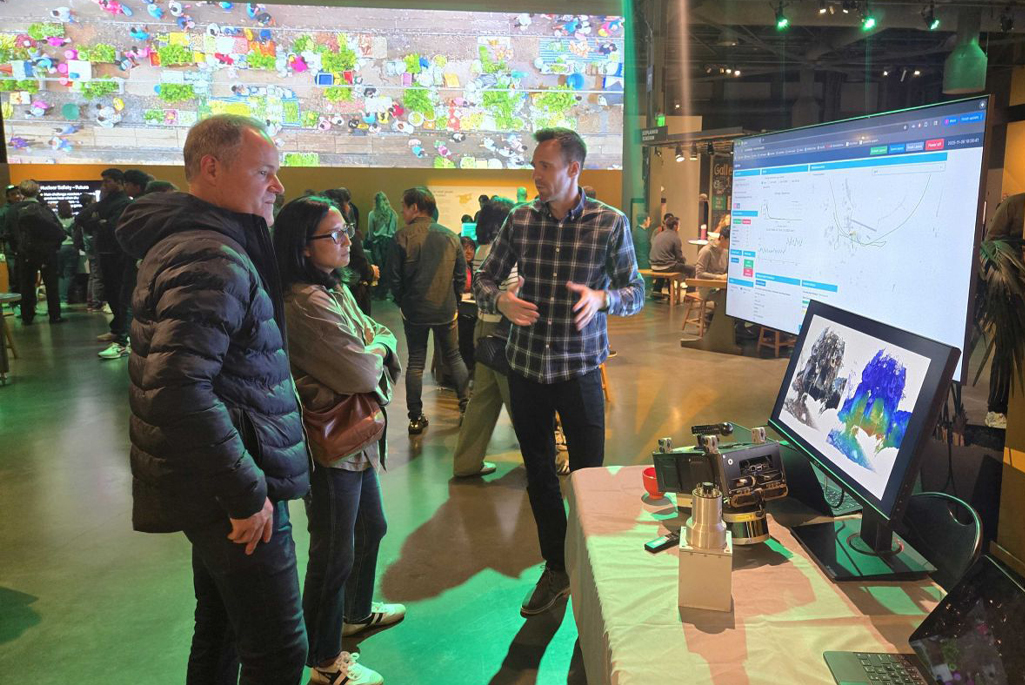
Visitors to the demonstration were shown a live demonstration of real-time, 3D radiation mapping with an LBNL-developed sensor system. They also had the opportunity to learn about the fundamentals of radiation detection and imaging, and discuss how the detection and visualization of nuclear radiation helps to address challenges in the nuclear industry and beyond.
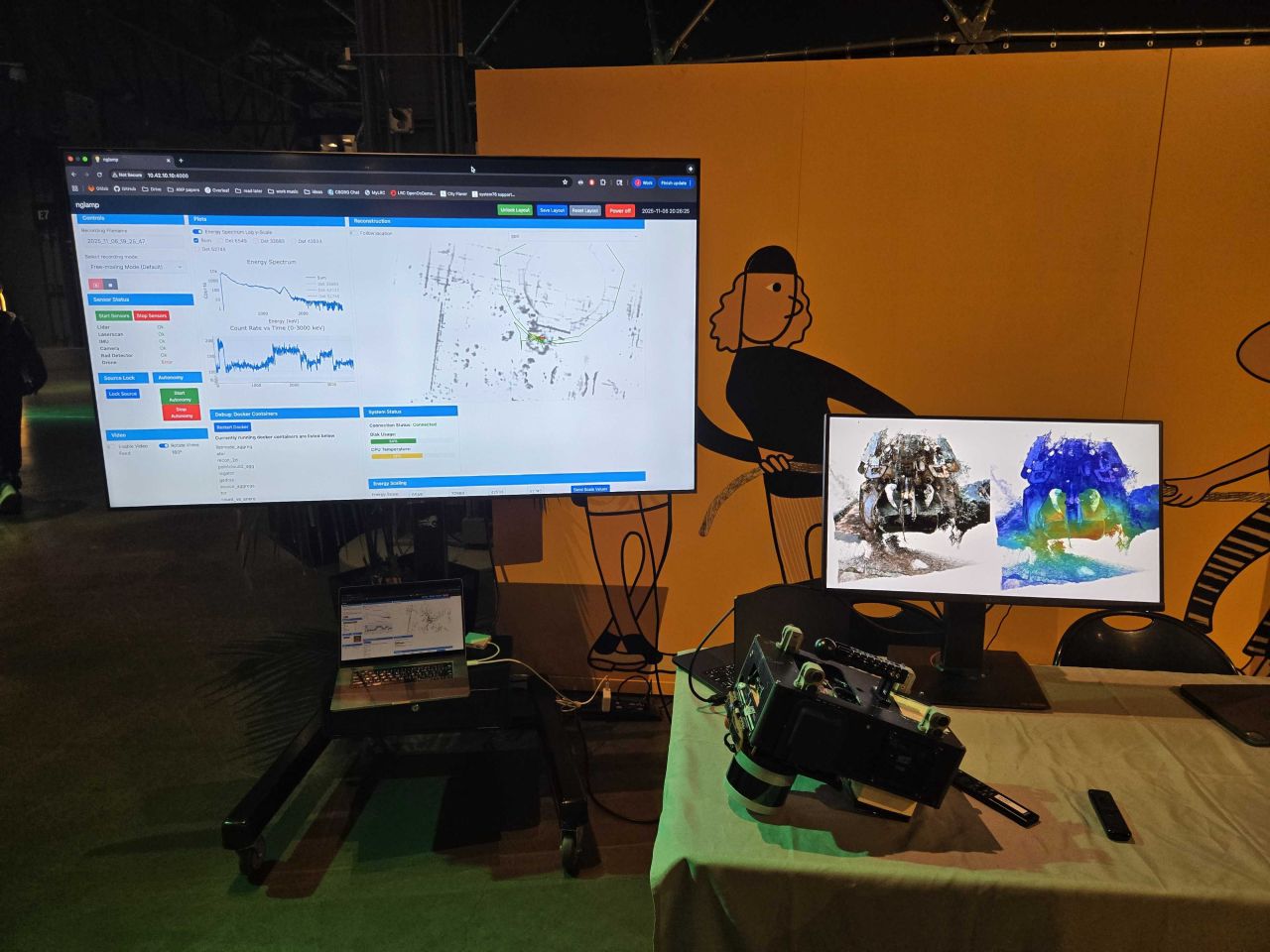
Image showing two displays of various graphs and plots, as well as visualization of radiation imaging and mapping.

Both Drs. Cooper and Vavrek were on hand to engage with attendees and answer questions about their research.
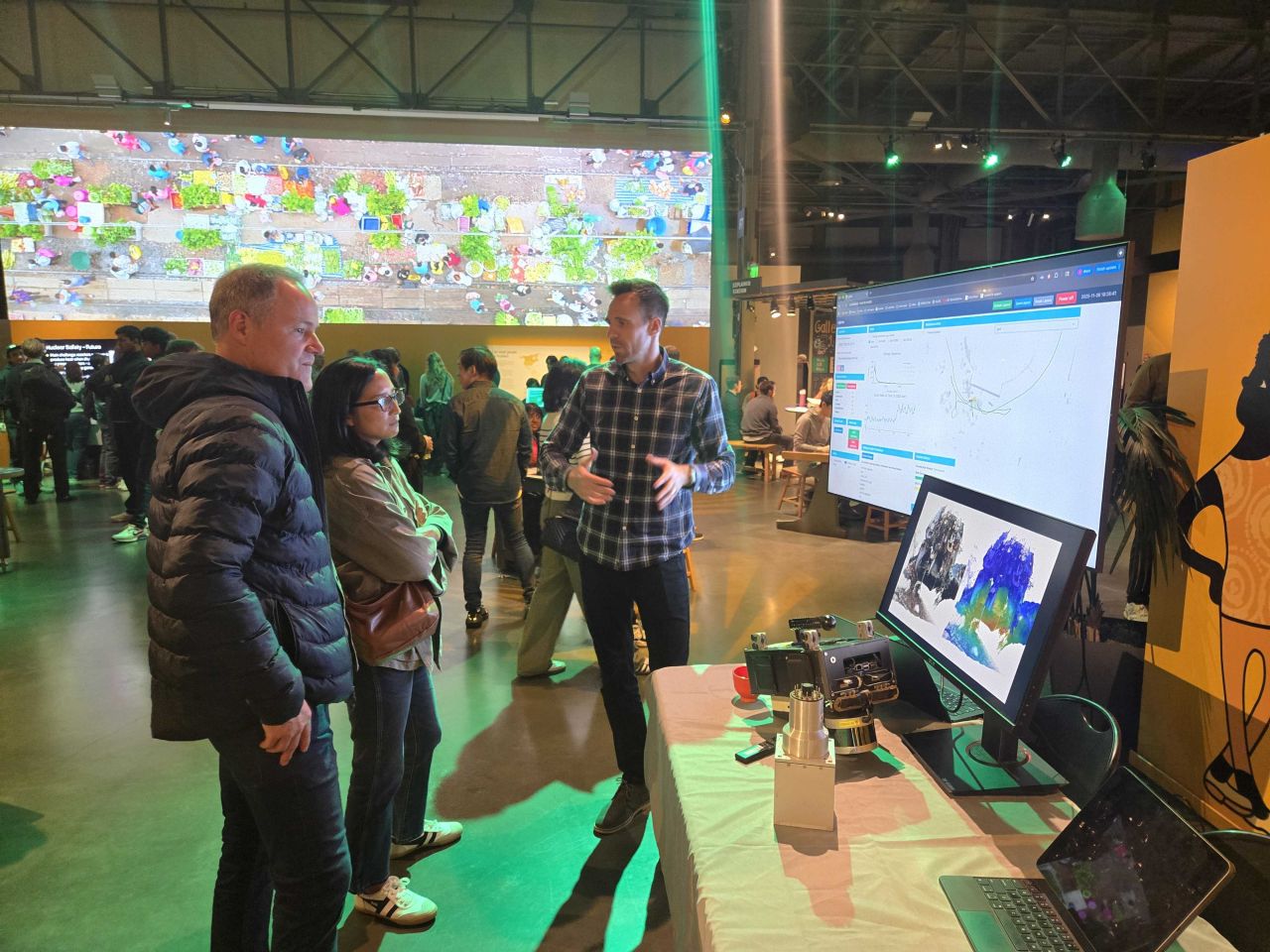
3 people standing in front of multiple displays showing radiation imaging technologies.

Jayson showed the portability of the system and and then demonstrated its functionality in real world applications.
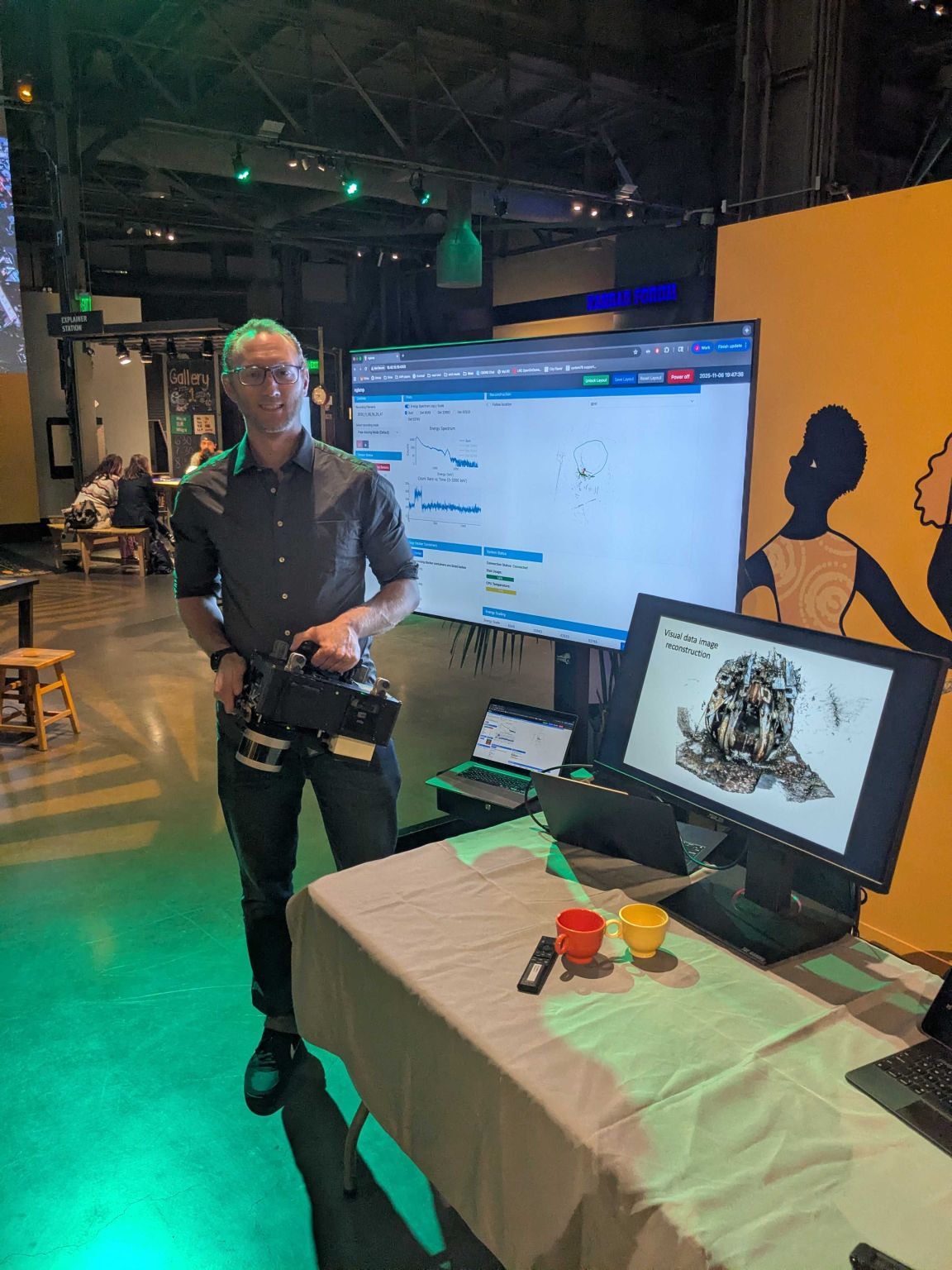
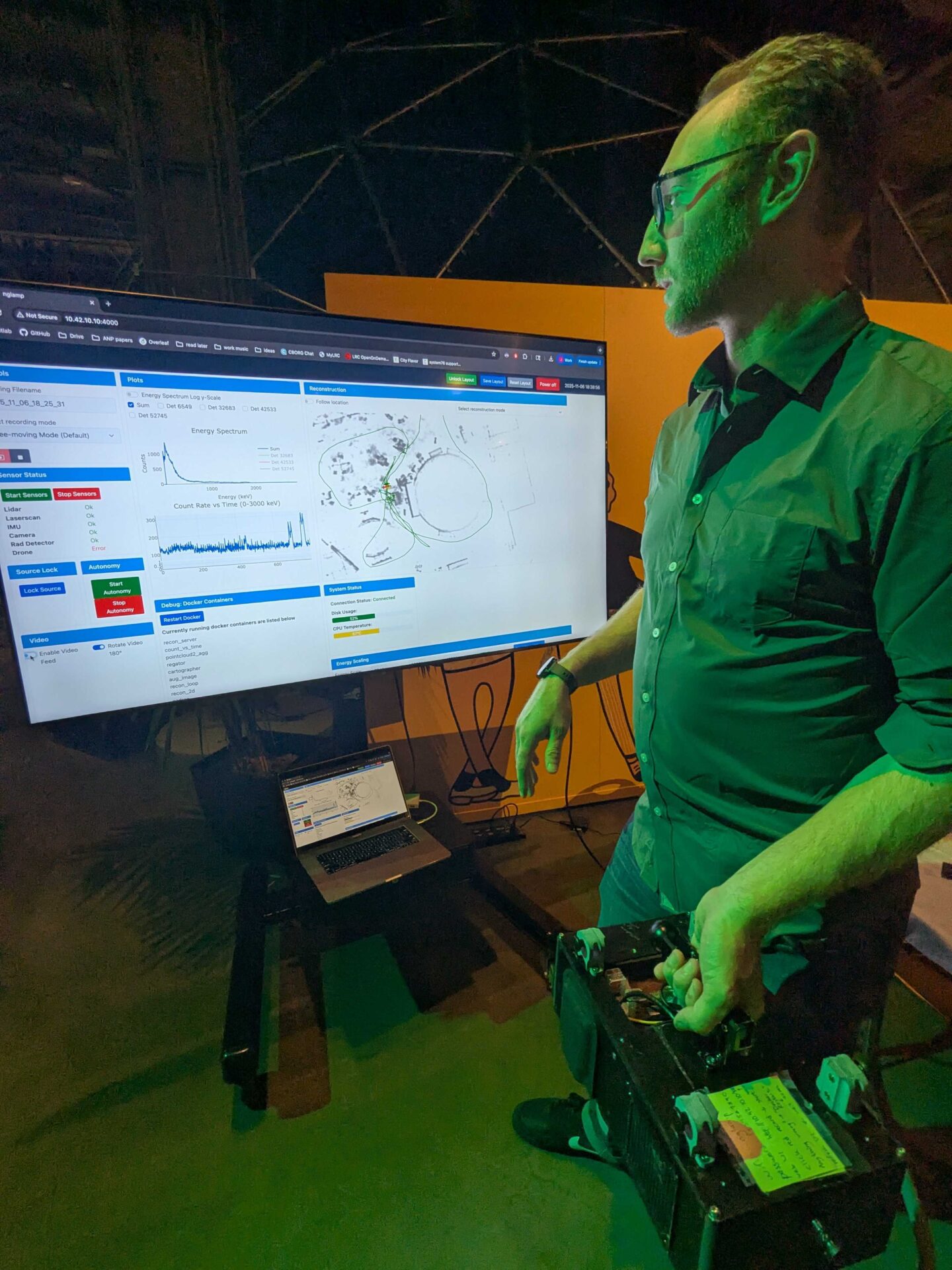
A while male in grey dress shirt holding a piece of equipment in front of displays showing scientific plots and imagery. A white male holding an electronic device in front of a digital display. Reynold Cooper Ren Cooper is a Senior Scientist at Lawrence Berkeley National Laboratory where he serves as the Deputy Director of the Nuclear Science Division and the Head of the Applied Nuclear Physics Program. He received B.Sc., M.Sc., and Ph.D. degrees from The University of Liverpool, UK and joined LBNL in November 2011 following three years of postdoctoral research at Oak Ridge National Laboratory. Ren specializes in the development of novel radiation detection and imaging systems and algorithms for fundamental physics, nuclear safeguards, nuclear safety, and nuclear security. He currently leads research projects that include the development of new High Purity Germanium detectors, the development of advanced technologies for vehicle-based radiati … Jayson Vavrek Radiation mapping