
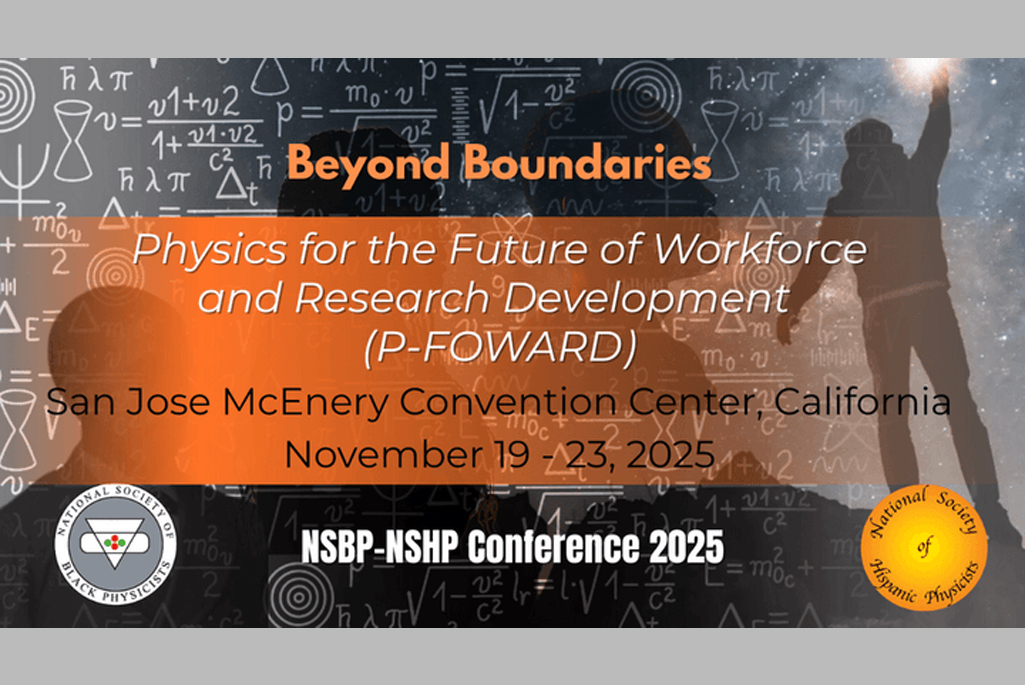
Last November, along with a group of staff, postdocs, and graduate students from the Lab and UC Berkeley, I attended the 2025 National Society of Black Physicists – National Society of Hispanic Physicists (NSBP-NSHP) Joint Annual Conference hosted by the San Jose McEnery Convention Center. For the San Francisco Bay Area’s physics community, the event was a perfect opportunity to showcase the research excellence of the “Berkeley community,” as Lawrence Berkeley National Laboratory (LBNL) and UC Berkeley partnered to engage with the next generation of scientific talent.
The collaboration between “Lab and Campus” was central to the Nuclear Science Division’s presence this year. By hosting two adjacent booths, we provided a comprehensive window into the various research pathways available in Berkeley. This joint effort was powered by a dedicated team of staff, postdocs, and graduate students who served as the primary face of our institutions.
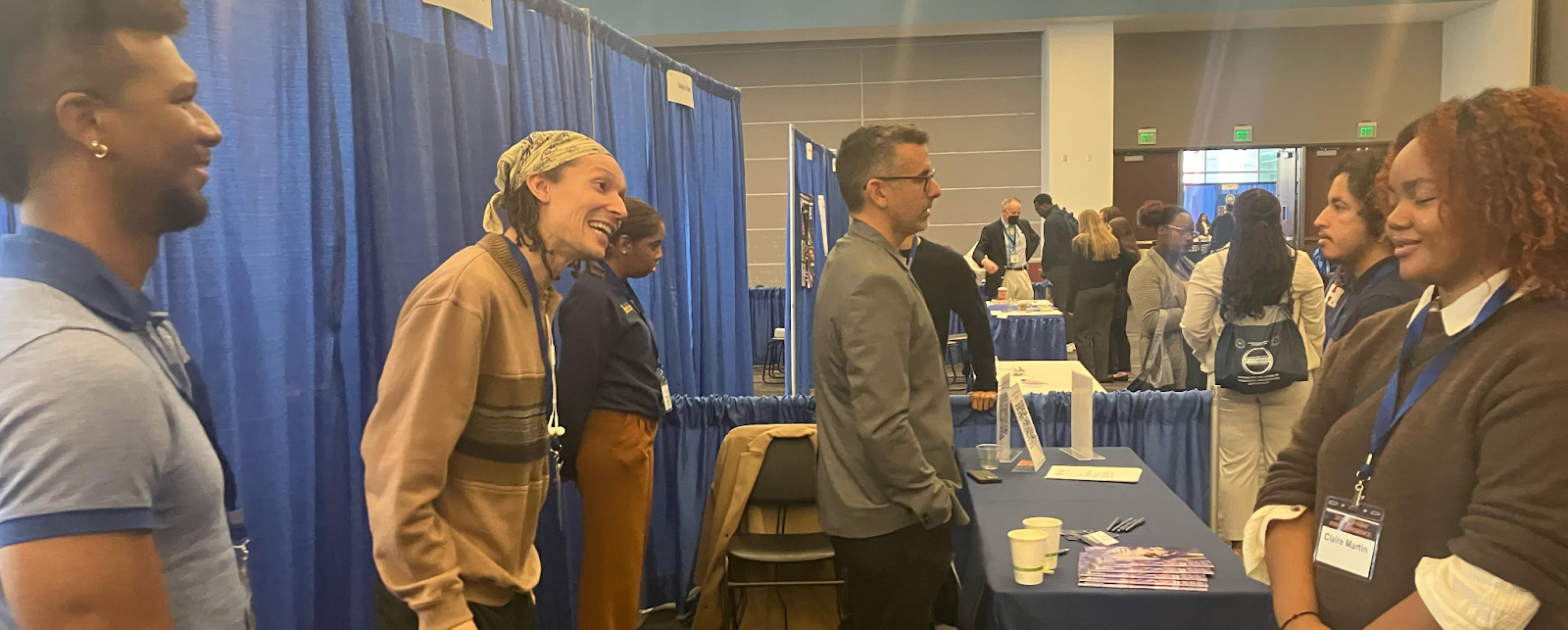 Rather than a formal recruitment exercise, our presence was focused on scientific exposure. We engaged in one-on-one conversations introducing attendees to the Laboratory’s unique capabilities, from the Advanced Light Source (ALS) to the cutting-edge work in Quantum Information Science and High-Energy & Nuclear Physics. By having current grad students and postdocs on hand, we were able to provide aspiring scientists with multiple perspectives.
The 2025 program, themed “Beyond Boundaries: Physics for the Future of Workforce and Research Development (P-FOWARD),” featured an impressive slate of speakers who reinforced the conference’s high scientific caliber. Notable highlights included talks on the cutting edge of Quantum Information Science & Quantum Computing by LBNL’s Wibe de Jong and a fireside chat with the directors of the local national labs, including our very own Michael Witherell. Speakers addressed the intersection of fundamental physics and the technological needs of the future.
While the focus was firmly on the future of research, the conference also serves as a point of reflection for many of us who have attended the conference through the years. My own scientific career began at this very meeting at Nashville, Tennessee in 2008. This conference made a strong impression on me at the time. Not only was it my first conference, but it was also the first moment that I had the opportunity to meet black and Hispanic professional physicists. Having faced many insecurities about my own personal background, it was quite reassuring to see the vibrant community that folks with a similar background to myself had managed to build.
My experience is far from unique. Dr. Makinde Ogunnaike, a postdoctoral research fellow working in the cutting edge of condensed matter theory, shared a similar sentiment: ”I got into graduate work because of encouragement at the conference. After helping found the NSBP chapters at UC Berkeley and at MIT/Harvard, it’s been heartening to see the impact the conference and larger community has had on younger researchers. I’ve seen community events and scientific collaborations come out of these activities.”
Seeing the halls of San Jose filled with the same energy I felt in Nashville 17 years earlier was a reminder that the NSBP-NSHP meeting plays a vital role in the American physics landscape, especially as a place where young scientists can find mentorship, community, and professional connections. That’s why it was concerning to see the effects of this year’s major funding cuts to this impactful event. Attendance fell from the usual ~1,100 to under 700, and that inevitably means fewer chances for junior scientists to meet potential collaborators, mentors, and future employers.
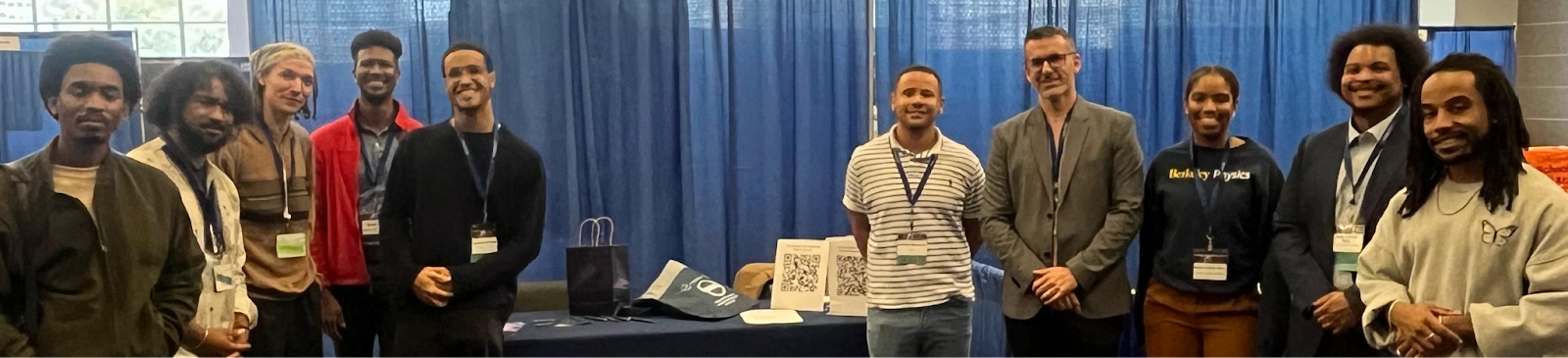
I left San Jose with mixed feelings. I was reminded how powerful these conferences can be in building networks and confidence, but also how fragile our scientific ecosystems are when support is reduced. NSBP and NSHP have spent years creating a scientific space that is both rigorous and uniquely welcoming and it is worth protecting.
At the same time, our joint LBNL/UC Berkeley presence gave me real hope. Watching our graduate students, postdocs, and staff eagerly share their experiences made it clear that the spirit of the conference is still very much alive. As we look forward, I hope we can match that energy with sustained investment, so the next generation doesn’t just inherit the community we built, but a stronger one.
