
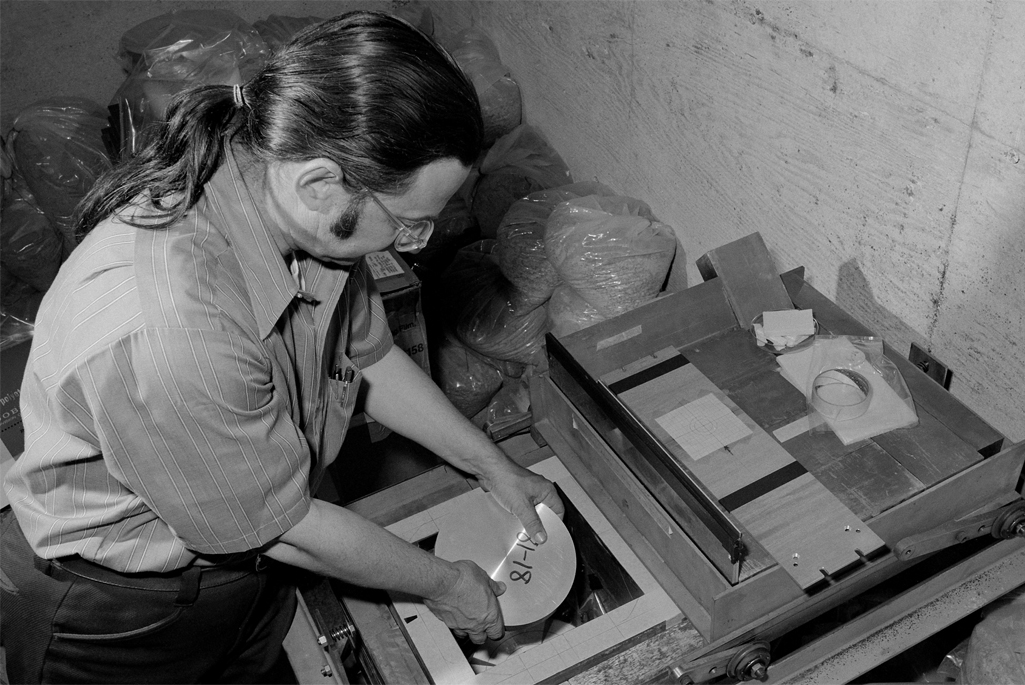
The Berkeley Low Background Facility (BLBF) has had a long history of enabling low background measurements for experiments at LBNL and beyond. The story of the BLBF began in 1953, when Alan “Al” Smith joined LBNL. With the Bevatron accelerator beginning operations in 1954, Smith was tasked with evaluating radiation backgrounds around the facility. Stray neutrons from the accelerator interfered with his sensitive measurements, prompting him to investigate more sensitive methods.
To shield detectors from accelerator radiation and cosmic rays, a dedicated cave was constructed in Building 72 with 1.5– to 2-meter-thick walls of low-radioactivity concrete. It soon became an important resource for increasingly sensitive experiments.
In 1980, Berkeley Lab’s detector group, led by Fred Goulding, and Al collaborated with UC Santa Barbara physicists (including our Lab’s former Director Michael Witherell) on a germanium-detector experiment to search for neutrinoless double-beta decay. After becoming background-limited in Building 72, the experiment moved to the Oroville Dam power plant, where it operated until around 1990. Following the experiment, Smith repurposed the shielding and germanium detectors for sensitive materials assay work, laying the foundation for BLBF’s long-running mission.
In 2014, after roughly 25 years of assay operations at Oroville Dam, BLBF expanded its underground capabilities by relocating operations to the 4,850-foot level of the Sanford Underground Research Facility (SURF) in South Dakota.
BLBF supported numerous landmark neutrino, double-beta decay, and dark-matter experiments. It assayed materials for projects including SNO, KamLAND, Daya Bay, CUORE, the Majorana Demonstrator, KATRIN CDMS, SuperCDMS, LUX, LUX-ZEPLIN (LZ), and TESSERACT. For LZ alone, BLBF assayed more than 800 samples.
As demand for underground assays to support low-background experimental construction evolved, the remaining detectors and equipment were moved to a multidisciplinary underground laboratory space at SURF—the Black Hills State University Underground Campus—where personnel there now operate them. Meanwhile, the Building 72 facility was decommissioned in October 2025, concluding more than seven decades of activity there. The unique space will be retooled for other future activities.
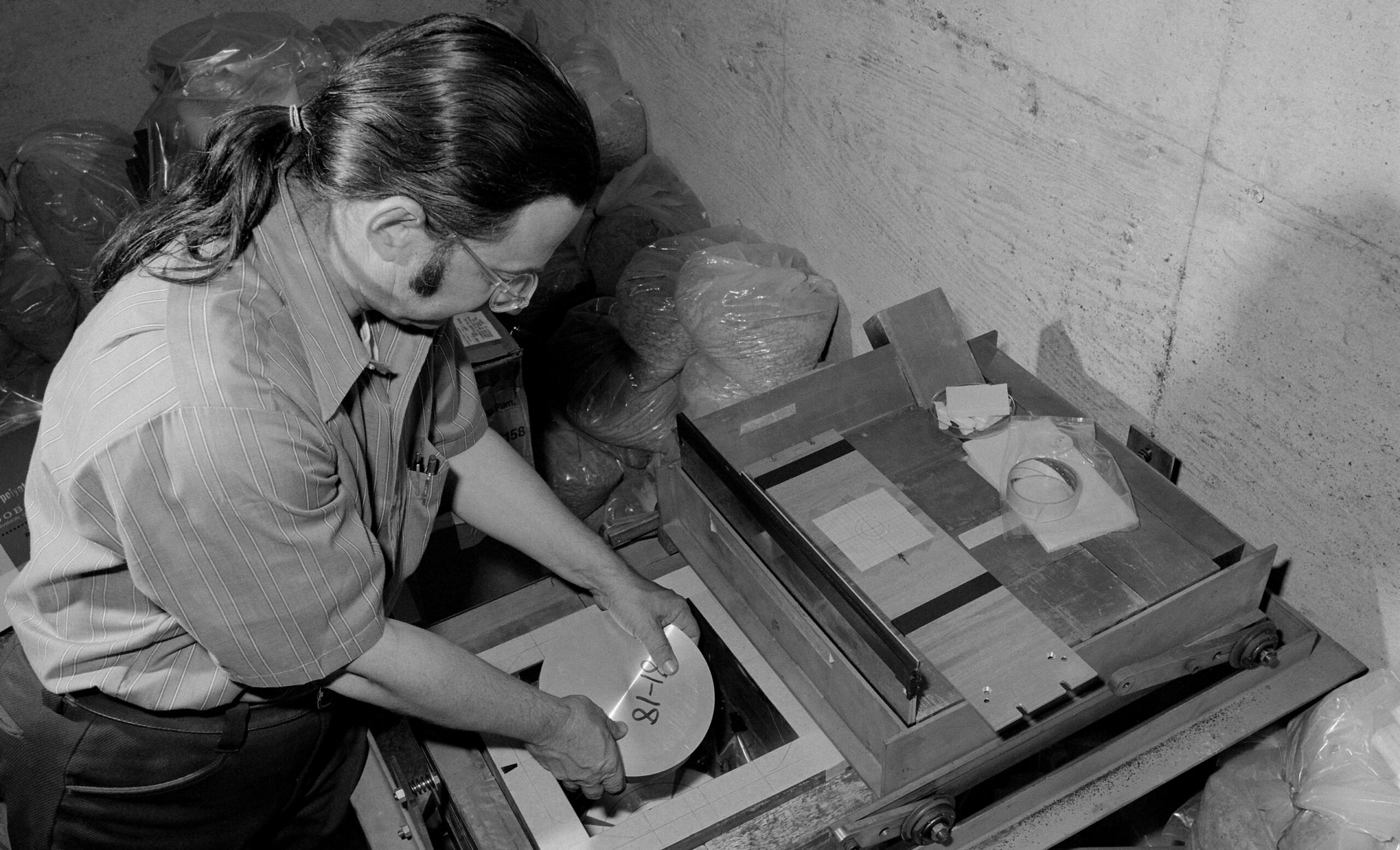
Al Smith loading an aluminum disc to study neutron activation in a counter in the Building 72 lab (circa 1950s).
