Heather Crawford elected 2026 APS Fellow

Physics Data for Machines (PD4M) AI-Ready Data for Nuclear Theory and Experiment
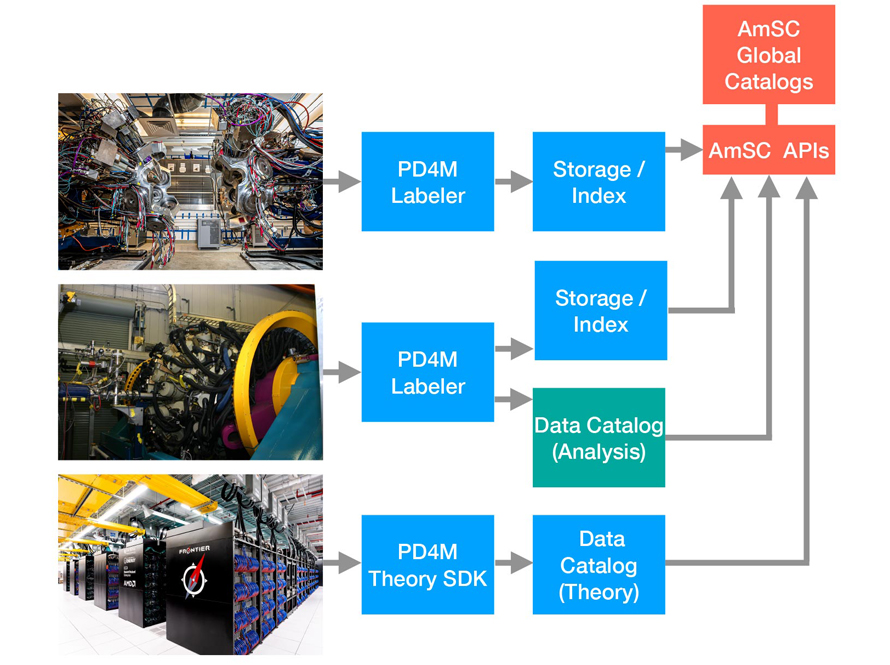
A block diagram showing images of the spectrometers GRETA and Gammasphere with arrows representing data flowing into PD4M labelers. A third image of the Frontier supercomputer shows data flowing into a Software Development Kit block. Data from the labelers of the two experimental devices then flows into local storage and indices with metadata flowing to a block representing the American Science Cloud (AmSC) API and then a block representing the AmSC data catalog. The theory SDK block feeds data to a local data catalog and then to the AmSC API and catalog.

First nuclear science experiment with world's most advanced gamma-ray detector
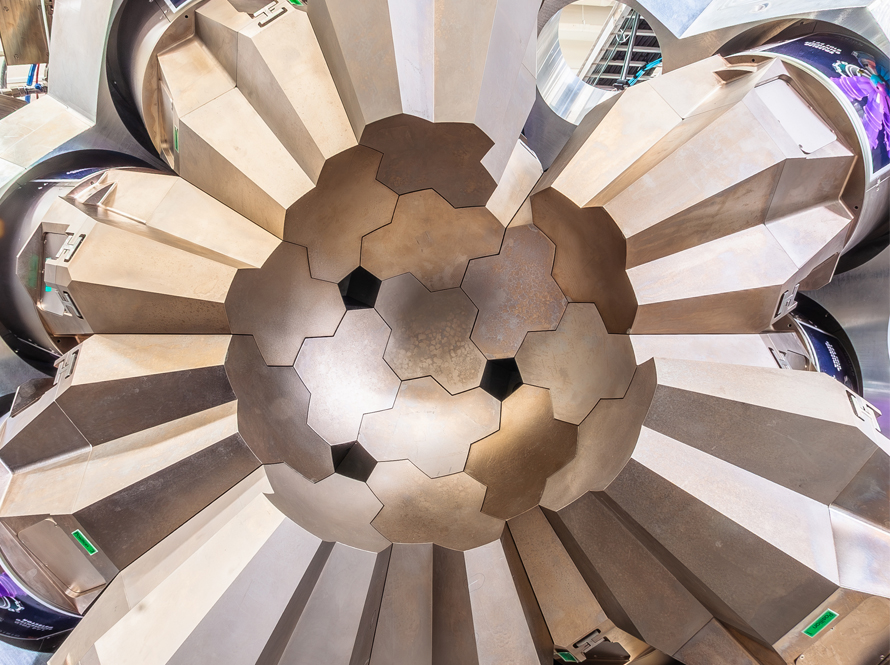
GRETA Comes Online for a New Era of Nuclear Science
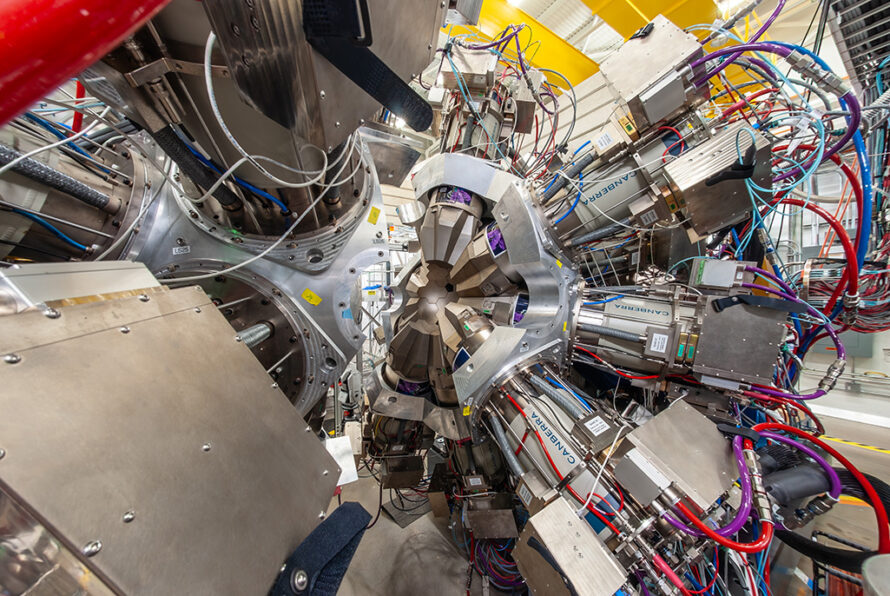
Close-up of GRETA’s two separated halves, showing germanium detector modules arranged around a central opening and surrounded by dense bundles of multicolored wiring and tubing.

Magnetic Clues Inside Atomic Nuclei Help Explain How Elements Form In Stars
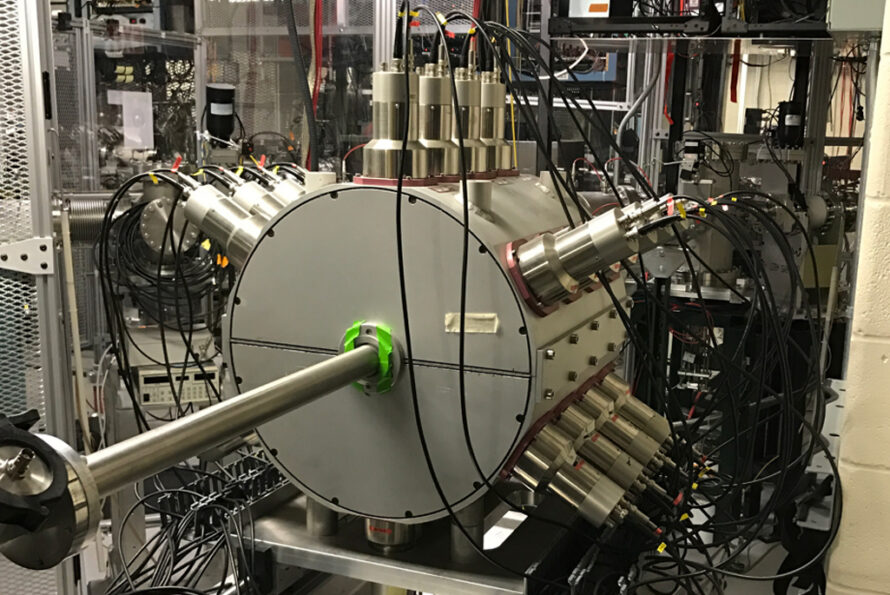
The SuN++ total absorption spectrometer at the Facility for Rare Isotope Beams (FRIB), used to determine the magnetic nature of the low-energy enhancement in atomic nuclei.

Announcing Paul Fallon as Interim Nuclear Science Division Director
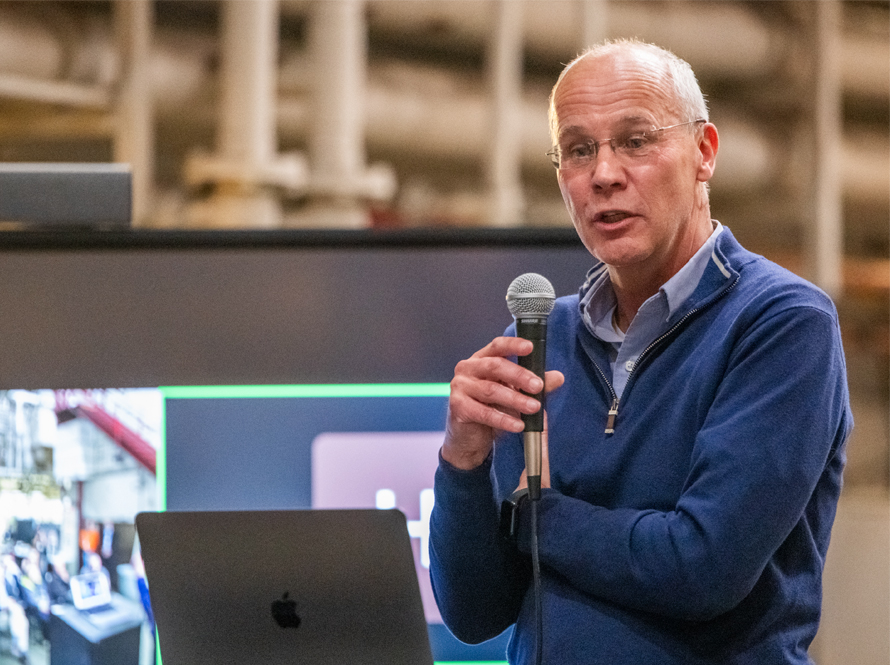
A white male in a blue shirt holding a microphone in front of a TV screen.

Nuclear Physicists Discover New Rule for Peppy Partner Picking
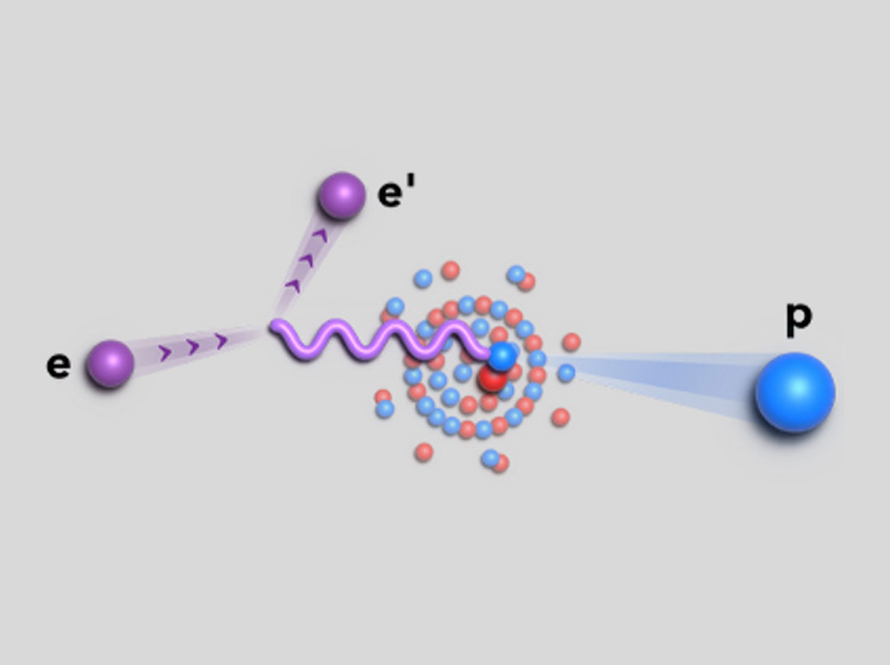
This schematic of the reaction shows an electron (purple) scattering from a nucleus by emitting a (purple) virtual photon, which knocks out a proton (blue).

Can the 88-Inch Cyclotron Save the Periodic Table?
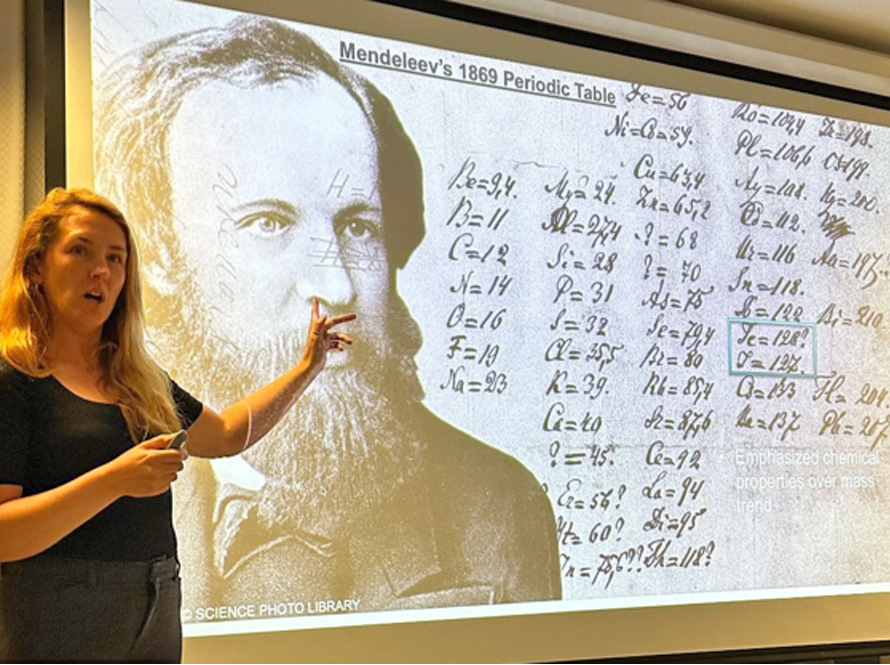
A blond white woman stands in front of a projected image.

Behind the Science: FIONA

Nuclear Science Division postdoc Marilena Lyklardopoulou (left) and Chemical Sciences Division graduate student Mirza Grebo (center) make adjustments as Jennifer Pore (right foreground), a researcher in Berkeley Lab's Nuclear Science and Chemical Sciences Divisions, shows viewers the FIONA spectrometer at the Lab's 88-Inch Cyclotron.

Episode 1: The Quest for Element 120 and the Elusive Island of Stability

In Memoriam: Rod Clark

Ion Recycling to Illuminate the Heaviest Elements

Illustration of the ion trap used by the ISOLDE team to measure the electron affinity of chlorine. In the trap, chlorine anions are reflected back and forth between two electrostatic ion mirrors, allowing the laser beam (pink) to probe the anions for much longer than in conventional measurements. The laser frequency is tuned to find the exact photon energy above which the extra electron (small white circle) is removed from the anion.

BBC Podcast: New Elements

Image depicting elements on playing cards overlayed over a representation of the periodic table.

GRETA: World’s most powerful detector to examine nuclear ‘fingerprints’ with 100x sensitivity

A group of five people (two women and three men) stand next to a large, spherical scientific machine.

GRETA to Open a New Eye on the Nucleus

Two people surrounded by a large aluminum sphere with dozens of cables.

New Technique Sheds Light on Chemistry at the Bottom of the Periodic Table

Two people in safety glasses hold glass beakers containing ball-and-stick models of nobelium molecules. They are surrounded by lab equipment that includes wires, foil-wrapped cables, metal apparatuses, and a computer screen showing data. Images of molecules are projected on the ceiling panels.

NSD Hosts the 22nd Annual Exotic Beam Summer School

photograph of the group of participants of the summer school.

NSD Welcomes Summer Interns

Workshop and Dedication Event Celebrates the Near Completion of GRETA and a Decade of Science with GRETINA

A group of people standing in front of a piece of scientific equipment.

Building a Data Pipeline to Accelerate Discovery

Erich Leistenschneider announced as one of the winners of the 2025 FRIB Achievement Award for Early Career Researchers 

GRETA Dedication: Celebrating a Decade of GRETINA Science

Julian Kahlbow Receives 2025 FRIB Visiting Scholar Program for Experimental Science Award

GRETA Demonstrates Key Performance Parameters