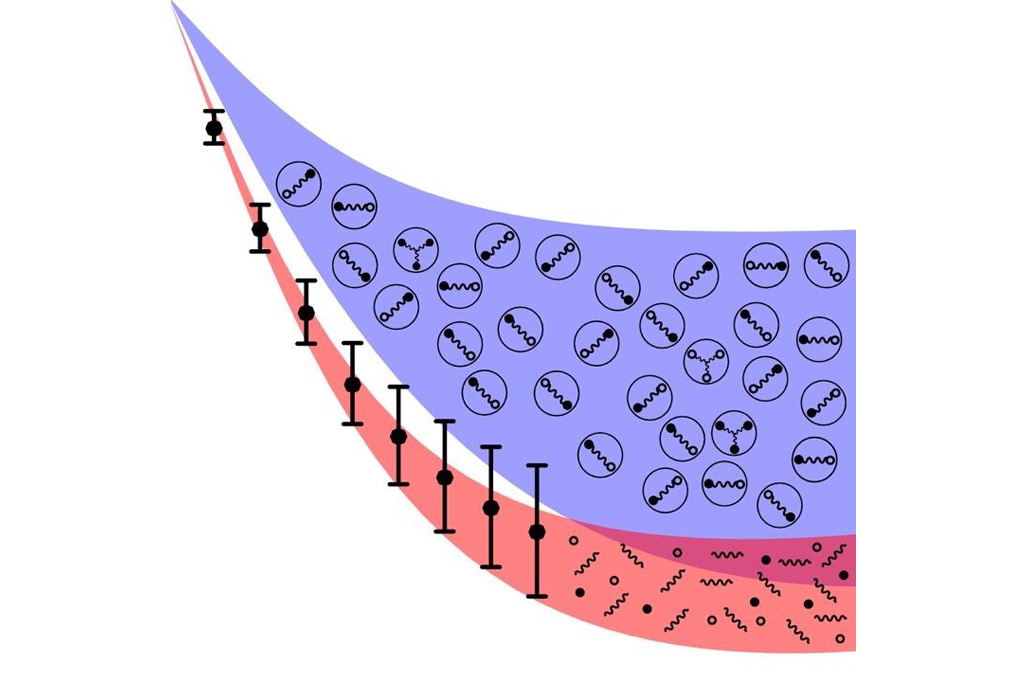
When two lead nuclei collide at nearly the speed of light, they create a tiny drop of matter hotter than the center of the Sun. In this extreme state, called quark–gluon plasma, electric charge is carried by quarks with fractional charge (one-third or two-thirds of the electron charge), so the total charge fluctuates less than in ordinary matter. We calculated how these fluctuations should look in a real detector and compared them with data from the ALICE experiment at CERN’s Large Hadron Collider. The results favor the scenario where the matter behaves like a quark–gluon plasma. Published in Physical Review Letters.