News Archive

Episode 1: The Quest for Element 120 and the Elusive Island of Stability

In Memoriam: Rod Clark

Leading the Field in Magnets

Two researchers in protective glasses look into a superconducting magnet experimental setup.

A Quarter-Century of Surprises: Exploring the Quark-Gluon Plasma

A massive blue ring with green wires looped inside of it and multi-colored wires coming out of the edges. There is a long rod that goes in a hole in the middle of it.

Indications for Freeze-Out of Charge Fluctuations in the Quark-Gluon Plasma at the LHC

A comparison of experimental data (black dots) with theoretical predictions. The red band represents the Quark-Gluon Plasma scenario, which matches the data better than the Hadron Gas scenario (blue band).

Appointment of 88-Inch Cyclotron Deputy Director

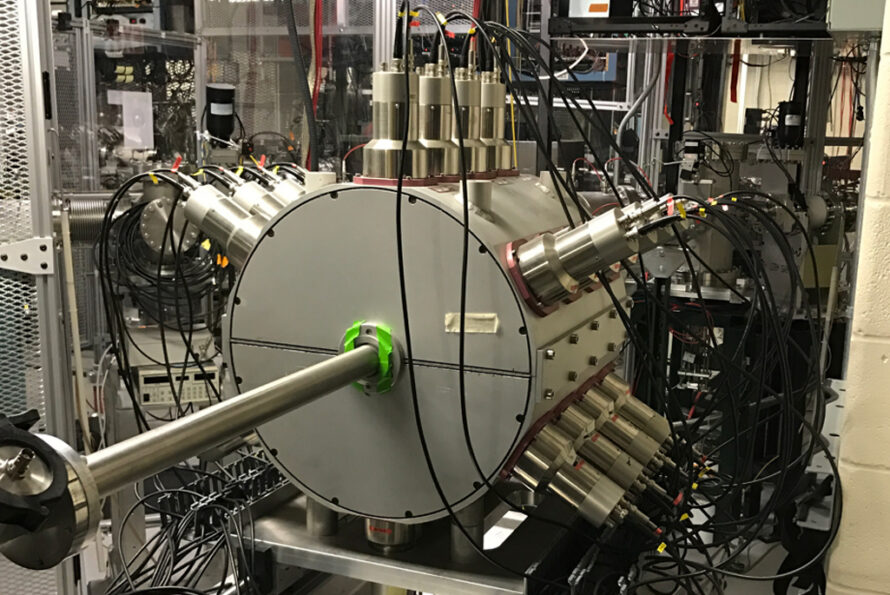
Made in Berkeley Lab: the plasma chamber at the heart of heavy ion accelerators

An up close view of the flange for the fourth-generation VENUS plasma chamber. The device was made in-house by the Engineering Division’s highly skilled technicians.

Micro Journeys Podcast: Inside Berkeley Lab's 88-Inch Cyclotron

3 people stand in front of a scientific poster

Stars Forge Elements in a Way We’re Only Beginning to Understand

Person standing next to lab equipment

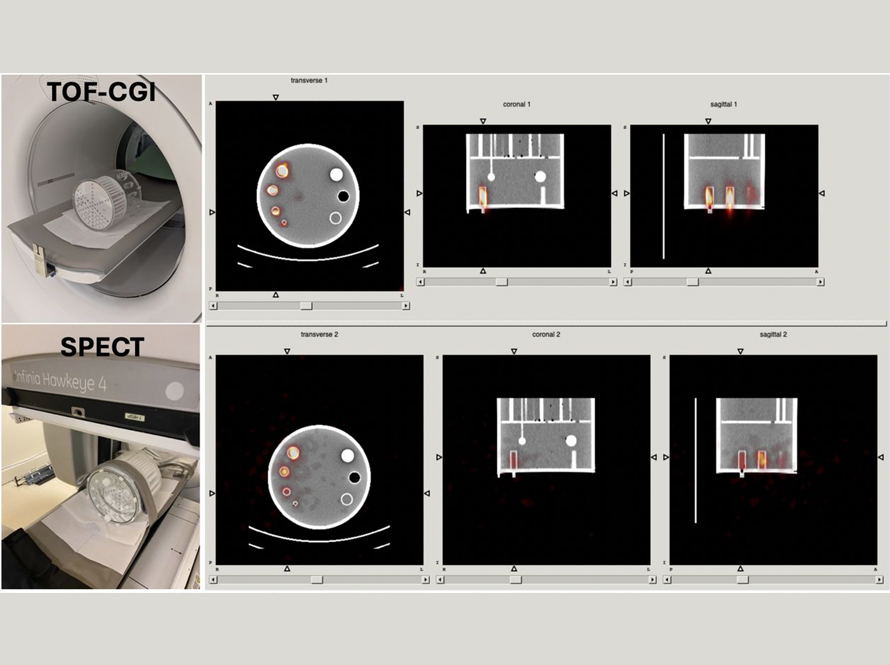
After Dark: Modern Methods of Visualizing Nuclear Radiation

3 people standing in front of multiple displays showing radiation imaging technologies.

Berkeley Lab Hosts ALICE Grid Operations Review Meeting

Ion Recycling to Illuminate the Heaviest Elements

Illustration of the ion trap used by the ISOLDE team to measure the electron affinity of chlorine. In the trap, chlorine anions are reflected back and forth between two electrostatic ion mirrors, allowing the laser beam (pink) to probe the anions for much longer than in conventional measurements. The laser frequency is tuned to find the exact photon energy above which the extra electron (small white circle) is removed from the anion.